
A racquet is described by four properties, and once you can read them the wall of options in a shop stops being a wall. None of what follows names a brand or a model: those are questions for a shop and for your own hands.
Head size is the first. A larger head has a bigger sweet spot, so off-centre hits still go somewhere useful — forgiving, and generally easier to start with. A smaller head returns less on a mishit and more precision on a clean one. The trade is forgiveness against control, and it is the trade a beginner should take on the forgiving side.
Weight and balance are the second and third, and they work together. A heavier racquet does more of the work on impact and asks more of your arm; a lighter one is quicker to swing and gives back less. Balance says where that weight sits: head-heavy adds punch and slows the swing, head-light does the reverse. Two racquets of identical weight can feel nothing alike.
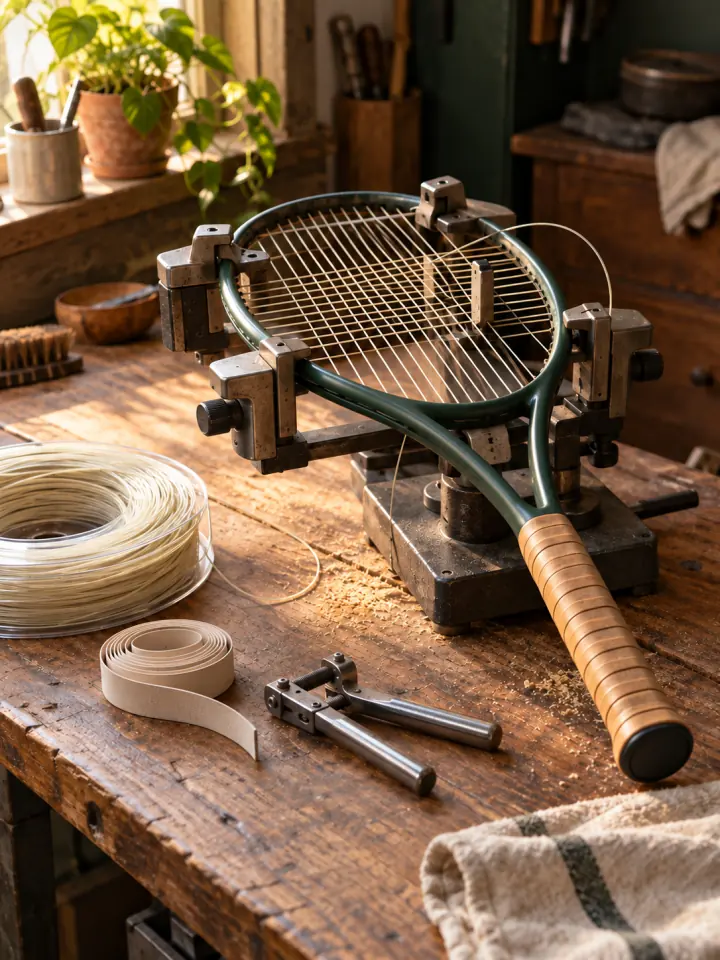
String tension is the last and the one people fiddle with most. The usual rule of thumb is that tighter strings give more control and looser strings more power — a starting point rather than a law, since it interacts with the string itself and with how hard you swing. If you change one thing at a time you will learn what your own arm prefers; if you change three, you will learn nothing.
General guidance, not a research finding.